 Track Order
 myAcademy® Rewards Credit Card
 Need Help?
Gifts By Budget

Academy Sports + Outdoors
Academy, LTD
7 Exercise Bikes: Find Your Perfect Fitness Ride at Academy
10 min read

Starting your fitness journey or looking to upgrade your home gym? Choosing the right exercise bike is a big step toward achieving your goals. With so many options, it can feel tricky to pick the perfect one. Academy Sports + Outdoors is here to help you understand each type, so you can make a smart choice for your passion.
Key Takeaways
- What are the main types of exercise
bikes?
There are several common types of exercise bikes, including spin, upright, recumbent, folding, under-desk, air, and smart bikes. Each offers a different workout experience and benefit.
- Which exercise bike is best for high-intensity
workouts?
Spin bikes and air bikes are excellent for high-intensity interval training (HIIT) and powerful cardio sessions. They push you to work hard.
- What if I need a low-impact workout or have joint
pain?
Recumbent bikes and upright bikes provide low-impact cardio that is gentler on your joints and back, making them great for recovery or beginners.
- How can I choose the right bike for my space and
budget?
Consider folding bikes or under-desk bikes for small spaces. Smart exercise bikes offer advanced tech but often come with a higher price and subscription.
What Are the Different Types of Exercise Bikes?

| Exercise Types Chart | ||||||
|---|---|---|---|---|---|---|
| Types of Exercise Bike | Typical Resistance | Typical Weight Capacity | Typical Bike Weight | Minimum Space Required | Typical Muscles Worked | Typical Cost |
|
Magnetic, contact |
250-300 lbs. |
115-150 lbs. |
10 square feet |
Legs, lower body (core, glutes, etc.) |
$300-$1200+ |
|
|
Magnetic, contact |
250-350 lbs. |
80-150 lbs. |
12 square feet |
Legs, lower body |
Under $600 |
|
|
Magnetic, contact |
250-300 lbs. |
100-125 lbs. |
10 square feet |
Legs, lower body |
$500-$1200+ |
|
|
Magnetic, contact, fan wheel or air |
225-300 lbs. |
40-75 lbs. |
10 square feet |
Legs, lower body |
$150-$650 |
|
|
Fan wheel or air |
250-350 lbs. |
60-140 lbs. |
10 square feet |
Legs, lower body, upper body (biceps, shoulders, etc.) |
Under $400 |
|
|
Magnetic, contact |
No limit when sitting down in chair |
8-25 lbs. |
3 square feet |
Usually just legs |
Under $100 |
|
|
Magnetic, contact |
250 lbs. |
30-60 lbs. |
6 square feet |
Legs, lower body |
Under $200 |
|
Spin Bikes
Spin bikes, also known as indoor cycling bikes, are popular for their intense cardio workouts. They are made to feel like riding a road bike. You sit in a forward-leaning position, just like a cyclist. These bikes often feature a heavy flywheel and adjustable resistance levels to make your ride harder or easier.
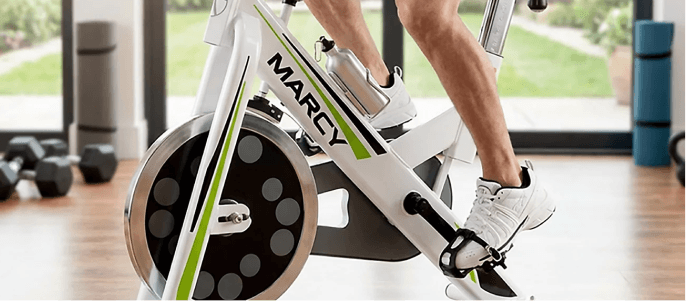
Many spin bikes have either friction resistance or magnetic resistance. Friction uses pads that press against the flywheel. Magnetic resistance uses magnets near the flywheel for a smoother, quieter ride. You can often ride standing up or seated, giving you many ways to work out.
What Riding a Spin Bike Feels Like
Riding a spin bike puts you in an active, forward-leaning stance. This is similar to what you would feel on a real road bike. You will feel your leg muscles, especially your quads and glutes, working hard. Many workouts involve standing climbs, fast sprints, and heavy resistance. It's a challenging and engaging experience.
What Spin Bikes are Best For
Spin bikes are best for people who love cycling classes, high-intensity interval training, and endurance rides. They are great for athletes focused on performance and anyone wanting a powerful leg workout. If you enjoy pushing your limits, a spin bike is a fantastic choice.
Spin Bike Workout Examples
- HIIT Ride: Try 30 seconds of fast pedaling at high resistance, followed by 90 seconds of easy recovery. Repeat this for 20 minutes.
- Climbing Workout: Increase your resistance every three minutes for a 30-minute ride, making it feel like you're going uphill.
- Endurance Session: Maintain a steady, moderate pace and resistance for 45 to 60 minutes to build stamina.
Spin Bike Pros and Cons
Pros
- Offers intense, calorie-burning workouts.
- Mimics outdoor cycling feel.
- Many models are available.
- Great for high-intensity training.
- Smaller footprint than some other cardio machines (Garage Gym Reviews).
Cons
- Can be uncomfortable for beginners due to the narrow seat.
- Less upper body engagement compared to air bikes.
- Improper form can lead to back pain.
Upright Bikes
Upright bikes place you in a position much like a traditional bicycle. You sit upright with the pedals directly beneath you. The handlebars are usually closer to your body than on a spin bike, keeping your back straight. These bikes often have a larger, more comfortable seat than spin bikes, making them a good middle-ground option.

Upright bikes are known for their simplicity and ease of use. They provide a smooth, consistent cardio workout that engages your core for stability. They are generally compact, making them a good fit for home gyms where space might be limited.
What Riding an Upright Bike Feels Like
When you ride an upright bike, you sit tall with your hips right over the pedals. This position is comfortable and engages your core muscles. Most of the work is done by your lower body: quads, glutes, and calves. The ride is stable and less aggressive than a spin bike.
What Upright Bikes are Best For
Upright bikes are ideal for general fitness, weight loss, and steady-state cardio. They suit beginners, casual exercisers, and those who want a traditional cycling feel without extreme intensity. Their compact size also makes them a smart choice for smaller spaces.
Upright Bike Workout Examples
- Steady Cardio: Ride for 30 minutes at a consistent, moderate pace where you can still talk easily.
- Light Intervals: Alternate 2 minutes of higher resistance with 3 minutes of lower resistance for 25 minutes.
- Warm-Up/Cool-Down: Use a light resistance and easy pace for 10-15 minutes before or after other workouts.
Upright Bike Pros and Cons
Pros
- More comfortable seats than many spin bikes.
- Compact design saves space.
- Good for a variety of fitness levels.
- Engages your core for stability.
Cons
- Limited variety in riding positions.
- May not offer the same high-intensity challenge as a spin bike or air bike.
- Fewer high-tech options compared to smart bikes.
Recumbent Bikes
Recumbent bikes are unique because they allow you to recline while you pedal. They feature a large, chair-like seat with a full backrest, and the pedals are out in front of your body. This design offers excellent back support and reduces strain on your joints. It's often seen as the most comfortable type of exercise bike (Garage Gym Reviews).

Because of their comfortable and supportive design, recumbent bikes are popular for rehabilitation, older adults, and anyone with back pain or joint issues. They provide a great cardiovascular workout without putting stress on your upper body or spine.
What Riding a Recumbent Bike Feels Like
You will sit in a reclined, relaxed position with your back supported. The pedals are out in front of you. This setup takes pressure off your lower back, hips, and knees. It creates a smooth and very low-impact pedaling motion. You can enjoy long, comfortable cardio sessions.
What Recumbent Bikes are Best For
Recumbent bikes are best for beginners, seniors, people recovering from injuries, or those with joint pain or mobility concerns. They are also ideal for longer, low-intensity cardio workouts where comfort is key.
Recumbent Bike Workout Examples
- Rehab Session: Pedal slowly with very light resistance for 15-20 minutes to improve circulation and gentle movement.
- Endurance Building: Ride at a steady, easy-to-moderate pace for 40 minutes, focusing on consistent pedaling.
- Cadence Focus: Alternate between fast pedaling and slower, controlled pedaling every 5 minutes to improve leg speed.
Recumbent Bike Pros and Cons
Pros
- Excellent lower back support and joint comfort.
- Very low-impact workout.
- Accessible for many fitness levels, including those with limitations.
- Offers a relaxed, comfortable riding experience (Garage Gym Reviews).
Cons
- Larger footprint compared to upright or spin bikes.
- Less core engagement than upright or spin bikes.
- Does not offer options for standing or upper body workouts.
Air Bikes
Air bikes, sometimes called 'fan bikes', use a large fan instead of a flywheel to create resistance. The faster and harder you pedal and push the handles, the more resistance the fan creates. This unique design gives you a full-body workout because it engages both your arms and legs.

Air bikes are famous in CrossFit gyms and for high-intensity interval training (HIIT). They are incredibly effective for quickly elevating your heart rate and building strength across your entire body. Be aware that the fan can be quite noisy during intense workouts.
What Riding an Air Bike Feels Like
Riding an air bike is an intense, full-body experience. You push and pull movable handlebars while pedaling your legs. The resistance directly matches your effort: the harder you go, the harder it gets. This makes for a challenging and fast-paced workout that quickly builds sweat.
What Air Bikes are Best For
Air bikes are best for HIIT, CrossFit-style workouts, and general conditioning. They are perfect for athletes who want to maximize effort in a short time. They also offer a full-body cardio workout with low joint impact.
Air Bike Workout Examples
- Sprint Intervals: Perform 15 seconds of all-out effort, then 45 seconds of easy recovery. Repeat this 10 times for a powerful workout.
- Calorie Challenge: Aim to burn 50-100 calories as fast as you can. This is a quick and effective burst of exercise.
- EMOM (Every Minute On the Minute): Try to complete 12 calories every minute, resting the remainder of the minute, for 10 minutes.
Air Bike Pros and Cons
Pros
- Provides a powerful full-body workout.
- Resistance increases with your effort.
- Excellent for high-intensity interval training.
- Low impact on joints (Garage Gym Reviews).
Cons
- The fan can be quite noisy.
- Often has a larger footprint than other bike types.
- Resistance cannot be adjusted manually; it's based on your effort.
Folding Bikes
Folding bikes are designed with space-saving in mind. They can be folded up and stored easily in a closet or under furniture when not in use. This makes them perfect for smaller apartments or rooms where a permanent exercise setup isn't practical.

While convenient, folding bikes usually prioritize portability over heavy-duty construction. They often have basic features and may not offer the same stability or range of resistance as larger, non-folding models. They are generally better for light to moderate workouts.
What Riding a Folding Bike Feels Like
Riding a folding bike feels similar to a simpler upright bike. You sit in an upright position. The resistance levels are typically modest, making them suitable for casual rides or warm-ups. They are not usually built for very intense, standing workouts.
What Folding Bikes are Best For
Folding bikes are best for individuals with limited living space or those just starting their fitness journey. They are ideal for light daily movement, recovery rides, or when you need to easily store your equipment.
Folding Bike Workout Examples
- Beginner Ride: Enjoy a 20-30 minute ride at an easy, steady pace to get your heart rate up gently.
- Low-Impact Intervals: Try 3 minutes of slightly faster pedaling, followed by 3 minutes of easy pedaling, for 30 minutes.
- Active Recovery: Use a very easy resistance for 15 minutes after a more strenuous workout.
Folding Bike Pros and Cons
Pros
- Small footprint when folded, easy to store.
- Often more budget friendly.
- Good for light to moderate exercise.
- Allows for convenient workouts in small spaces (Garage Gym Reviews).
Cons
- Less stable for high-intensity training.
- Lower weight capacity than many other bikes.
- Fewer advanced features or built-in programs.
Under-Desk or Mini Exercise Bikes
Under-desk bikes, also known as mini bikes, are the smallest type of exercise bike. They consist only of pedals and a resistance mechanism, without a seat or handlebars. You place them under a desk and pedal while sitting in your office chair or on a couch.

These bikes offer a way to get light physical activity throughout your day, even while working or watching TV. They typically provide very low resistance and are not designed for intense cardio workouts. Their main benefit is adding more movement to a sedentary lifestyle.
What Riding an Under-Desk Bike Feels Like
You sit normally in a chair and pedal with your feet. The movement is smooth and quiet. It feels like a gentle, continuous leg exercise that helps keep your blood flowing. The focus is on casual movement rather than breaking a sweat.
What Under-Desk Bikes are Best For
Under-desk bikes are best for people who spend many hours sitting and want to add light activity to their day. They are ideal for improving circulation, burning a few extra calories, and maintaining some leg movement. They are perfect for small spaces and low-impact exercise.
Under-Desk Bike Workout Examples
- Continuous Movement: Pedal at a comfortable, low resistance for an hour or more while working or watching a show.
- Light Boost: Increase resistance slightly for 10-15 minutes every hour to feel a small muscle engagement.
- Morning Warm-Up: Use it for 20 minutes in the morning to gently wake up your leg muscles.
Under-Desk Bike Pros and Cons
Pros
- Extremely compact and portable.
- Allows for exercise while sitting, promoting movement.
- Very affordable and easy to store.
- Low-impact and quiet operation.
Cons
- Not suitable for high-intensity cardio.
- Provides only a lower-body workout.
- Limited resistance range.
- Does not offer the full fitness experience of larger bikes.
Smart Exercise Bikes
Smart exercise bikes go beyond basic pedaling. They come with integrated HD touchscreens, advanced connectivity, and often require a subscription to an interactive fitness platform. These bikes offer immersive classes, virtual scenic rides, and personalized coaching. Brands like Peloton and NordicTrack are good examples.

The key feature of smart bikes is their integration with apps. They can automatically adjust resistance and incline to match your virtual instructor or terrain. This creates a highly engaging and motivating workout experience. Many also offer off-bike workouts like yoga or strength training through their screens.
What Riding a Smart Exercise Bike Feels Like
Riding a smart exercise bike is an immersive experience. The large screen and integrated app guide your workout. Resistance might change automatically, matching a virtual class or a scenic ride through mountains (OutdoorGearLab). It feels like you're part of a real-time class or exploring a new place.
What Smart Exercise Bikes are Best For
Smart exercise bikes are best for individuals who thrive on guided workouts, motivation from instructors, and a sense of community. They suit those looking for an interactive and varied fitness experience (OutdoorGearLab). They are an investment in a complete fitness ecosystem.
Smart Exercise Bike Workout Examples
- Live Studio Class: Join a live-streamed cycling class with an instructor who guides your pace and resistance.
- Scenic Route Ride: Follow a virtual ride through beautiful landscapes, with the bike adjusting to hills and flats automatically.
- Multi-Discipline Training: Use the bike's screen for off-bike yoga, strength, or meditation sessions.
Smart Exercise Bike Pros and Cons
Pros
- Highly engaging and motivating with interactive classes.
- Automatic resistance/incline adjustments for immersive rides.
- Offers a wide variety of workouts, including off-bike options.
- Excellent user interface and high-quality displays (OutdoorGearLab).
Cons
- High upfront cost and often requires a monthly subscription.
- Can have a large footprint.
- Reliance on technology; sometimes issues with connectivity or software.
Exercise Bike Resistance: Magnetic vs. Air
Understanding how resistance works on an exercise bike can help you pick the best one. Two common types are magnetic resistance and air (fan) resistance. Each offers a distinct feel and benefit to your workout.
Magnetic Resistance
Magnetic resistance uses magnets to create tension on a flywheel. When you turn a knob or press a button, magnets move closer to or further from the flywheel. This changes the effort needed to pedal.
Benefits:
- Quiet Operation: Because there's no physical contact, magnetic bikes are very quiet (OutdoorGearLab). This is great for home use, especially if others are nearby.
- Smooth Ride: The resistance is consistent and very smooth.
- Low Maintenance: Fewer moving parts mean less wear and tear over time.
- Precise Control: Often allows for many small adjustments in resistance.
Air (Fan) Resistance
Air resistance bikes, like air bikes, use a large fan. As you pedal, the fan blades push against the air. The faster you pedal, the more air resistance you create (Garage Gym Reviews). This type of resistance is dynamic.
Benefits:
- Full-Body Workout: Most air bikes have moving handles that work your arms and upper body, along with your legs.
- Unlimited Resistance: The resistance increases with your effort. There's no limit to how hard you can push yourself.
- Cooling Effect: The fan creates a breeze that helps to cool you during your workout.
Comparison Table: Magnetic vs. Air Resistance
| Magnetic vs. Air Resistance | ||
|---|---|---|
| Feature | Magnetic Resistance Bikes | Air (Fan) Resistance Bikes |
|
Noise Level |
Very Quiet |
Can be Loud |
|
Ride Feel |
Smooth, Consistent |
Dynamic, Increases with Effort |
|
Workout Focus |
Primarily Lower Body (some with arm levers) |
Full Body (Arms + Legs) |
|
Maintenance |
Very Low |
Low to Moderate (fan cleaning) |
|
Best For |
General fitness, classes, quiet environments |
HIIT, CrossFit, intense conditioning |
|
Resistance Adj. |
Manual knob or digital buttons (set levels) |
Effort-based (no set levels) |
|
Footprint |
Varies (compact to large smart bikes) |
Often Larger (due to fan and handles) |
Benefits of Using an Exercise Bike
Exercise bikes are an excellent way to boost your fitness from home. They offer many health advantages for people of all ages and fitness levels.
Improves Health - Using an exercise bike can greatly improve your overall health. Regular rides strengthen your heart, lungs, and blood vessels. This can lead to a healthier body composition and better cardiovascular wellness. It's a simple way to take care of yourself.
Quick, Convenient Workouts - Having an exercise bike at home means you can work out whenever you want. You don't need to go to a gym or worry about bad weather. Even a short ride can get your heart pumping and burn calories.
Low-Impact Exercise - One of the biggest benefits of exercise bikes is that they are low-impact. This means they are gentle on your joints. Unlike running, where your feet hit the ground hard, cycling takes your weight off your feet. This is great for people with joint pain or those recovering from injuries.
Strengthens Your Body - Riding an exercise bike works more than just your legs. While it strongly targets your glutes, hamstrings, and quads, many bikes also engage your core. Air bikes, with their moving handles, even give your upper body a workout. This helps to build muscle and burn calories.
Builds Cardiovascular Endurance - Consistent cycling helps make your heart muscle stronger. With a stronger heart, you can improve your endurance and reduce the risk of heart disease. Keeping your heart healthy is vital for a long and active life.
Frequently Asked Questions
What should I look for when buying an exercise bike?
When choosing an exercise bike, think about your fitness goals, available space, and budget. Consider the type of workout you want (high-intensity, low-impact, or full-body). Also, check for features like adjustable seats, resistance levels, and any included tech or programming.
Is cycling good for losing weight?
Yes, cycling can be very effective for weight loss. It's a great way to burn calories and improve your metabolism. Combining regular cycling with a balanced diet can help you reach your weight loss goals. The intensity and duration of your rides will affect how many calories you burn.
How often should I use my exercise bike?
For general health, aim for at least 150 minutes of moderate-intensity cardio per week, or 75 minutes of vigorous-intensity cardio. You can split this into 30-minute sessions most days of the week. Listen to your body and adjust as needed, especially if you're just starting out.
Choosing the right exercise bike is an important decision for your fitness journey. Whether you're looking for intense cardio, comfortable low-impact exercise, or a compact solution, there's a bike type that fits your needs. Each bike offers unique advantages to help you reach your fitness goals.
By understanding different types of exercise bikes - spin, upright, recumbent, air, folding, and smart bikes - you can confidently select the best 'investment in passion' for your home. Academy Sports + Outdoors is here to support you every step of the way.
Shop the wide selection of exercise bikes today at Academy Sports + Outdoors and pedal your way to a healthier, stronger you!
Share


Your Feedback Matters!