 Track Order
 myAcademy® Rewards Credit Card
 Need Help?
Gifts By Budget

Academy Sports + Outdoors
Academy, LTD
Exploring the Different Types of Trampolines
10 min read
Choosing the right trampoline requires a balance between safety features, available space, and your specific performance goals. From traditional backyard models to specialized fitness rebounders and professional gymnastic gear, each design offers a unique bounce and level of durability. By understanding the differences in shapes and mechanisms, you can select the perfect option to suit your family’s age range and skill level.
Key Takeaways
- Shape and Bounce Dynamics — The shape of a trampoline determines how it moves; round and oval designs naturally direct jumpers toward the center for safety, while rectangular and square models provide a consistent, high-performance lift ideal for athletes and gymnastics.
- Safety and Mechanism Innovations — Choosing between traditional metal springs and spring-free technology is a balance of budget and protection, as spring-free models eliminate pinch points and offer a smoother bounce, while inground options further increase safety by removing the risk of falling from a height.
- Purpose-Driven Selection — Selecting the right trampoline requires matching the model to the user's specific goals, ranging from compact indoor rebounders for low-impact fitness and kids' play to heavy-duty gymnastic or water trampolines designed for high-intensity training and specialized recreation.
Why Trampoline Type Matters
- Safety Features: Different types have varying safety elements (like enclosure nets or springless designs) to suit different user needs and environments.
- Purpose & Use Case: Some trampolines are built for fitness, others for recreational backyard fun, and others for competitive gymnastics — choosing the right type ensures it matches your goals.
- Space & Setup Requirements: Trampoline types vary in size and shape, impacting how much space you’ll need and where you can safely install it.
- Durability & Weather Resistance: Certain types are designed to withstand outdoor conditions, while others are meant for indoor use only.
- User Age & Skill Level: Some designs are safer and more stable for younger children or beginners, while others offer the bounce and performance experienced users need.
13 Types of Trampolines Compared
Choosing the right trampoline depends on your available space, safety needs, and fitness goals. This breakdown compares 13 distinct types, ranging from classic backyard models to specialized athletic equipment.

| Types of Trampolines Overview | |||
|---|---|---|---|
| Trampoline Type | Characteristics | Uses | Average Price Range* |
|
Round |
|
Outdoor recreational fun |
$200 - $1,400 |
|
Rectangular |
|
Outdoor athletic training and practice |
$600 - $2,400 |
|
Octagonal |
|
Outdoor recreational fun |
$2,400 - $3,800 |
|
Square |
|
Outdoor recreational fun |
$500 - $2,400 |
|
Oval |
|
Outdoor recreational fun |
$1,800 - $2,500 |
|
Spring |
|
Outdoor recreational fun |
$200 - $1,400 |
|
Spring-Free |
|
Outdoor recreational fun |
$750 - $4,000 |
|
Inground |
|
Outdoor recreational fun, especially for families with small children |
$1,000 - $5,000 |
|
Mini Inside (Rebounder) |
|
Indoor fitness routines |
$45 - $829 |
|
Kids |
|
Indoor play for young children |
$60 - $110 |
|
Inflatable |
|
Temporary outdoor recreational fun |
$180 - $320 |
|
Gymnastic |
|
Athletic and competitive use |
$10,950 - $34,000 |
|
Water |
|
Recreational aquatic use |
$160 - $700 |
|
*Please note that these price ranges are estimates. Prices will vary by factors like brand, size, and installation requirements. |
|
|
|
1. Round Trampolines
- Round trampolines are probably what most people picture when they think of a backyard trampoline.
- They’re popular for casual, kid-friendly fun because they naturally direct jumpers back toward the center.
- This makes them ideal for beginners and recreational jumpers.
- Round trampolines come in a wide variety of sizes, so it’s easy to find one that fits your space.
2. Rectangle Trampolines
- Rectangle trampolines have a much more controlled, consistent bounce across the entire surface.
- They’re ideal for experienced jumpers wanting to practice flips, tricks, and routines.
- Each area of the mat gives you a reliable lift, so you’re not constantly being pulled toward the center like on a round trampoline.
- Rectangle trampolines tend to take up more space, but the extra room allows athletes to move around and build momentum for higher jumps.
3. Octagonal Trampolines
- Octagonal trampolines are a good halfway point between round and rectangle trampolines.
- They give you a little more jumping space than a round trampoline, but with an even bounce across the surface, so you’re not always funneled right back to the center.
- They’re a great pick for families who want something a little different or for jumpers who like variety in their bounce.
4. Square Trampolines
- Square trampolines offer a bigger jumping surface than a round trampoline of the same overall size, with a balanced bounce that stays pretty consistent across the mat.
- That makes them great for families who want a little extra room to jump, or for experienced jumpers who like doing tricks but don’t necessarily need full-on professional-level height.
- Square trampolines tend to fit nicely into corners or tighter backyard spaces where a round or rectangular trampoline might feel awkward.
5. Oval Trampolines
- Oval trampolines are a stretched-out version of the classic round trampoline.
- The longer shape gives jumpers more room to move from end to end, which makes them awesome for games, multiple jumpers, or practicing controlled movements without feeling cramped.
- They still offer that safe, center-directed bounce like round trampolines, but with a little extra freedom.
- Oval trampolines are a favorite for families with kids of different ages or anyone wanting to maximize their jumping area without taking up as much space as a big rectangular trampoline.
6. Spring Trampolines
- Spring trampolines are the most common. They use metal springs around the frame to create that signature bounce.
- These trampolines tend to give a good amount of lift, and they come in tons of sizes and shapes, making them super versatile for all kinds of jumpers.
- That said, it’s important to keep an eye on wear and tear. The springs and frame padding can wear down over time, so regular maintenance is key to keeping them safe.
7. Spring-Free Trampolines
- Spring-free trampolines are a newer, safety-first design that replaces traditional metal springs with flexible rods or elastic bands beneath the jumping surface.
- This means fewer pinch points, less risk of injury from exposed springs, and generally a smoother, more cushioned bounce.
- They’re often a bit pricier upfront, but many families love them for the peace of mind they offer.
- Plus, they tend to last longer and require less maintenance compared to traditional spring trampolines.
8. Inground Trampolines
- Inground trampolines sit flush with the ground, meaning the jumping surface is level with your lawn.
- This design is great for families with younger kids, since it’s easier to get on and off and eliminates the risk of falling from a height.
- They blend in nicely with their surroundings and often feel more stable because they’re anchored at ground level.
- However, keep in mind that they take more time, money, and effort to install.

9. Mini Inside Trampoline (Rebounders)
- Mini trampolines — also called rebounders — are the compact, indoor-friendly version of the big backyard trampolines.
- These are designed more for fitness than for fun, making them perfect for low-impact cardio workouts, balance exercises, or just a little bounce to get your blood flowing.
- They’re small enough to fit in your living room, home gym, or even an office corner.
- People love rebounders for things like lymphatic drainage, improving coordination, and gentle joint-friendly exercise.
- They won’t send you soaring into the air like the big outdoor models, but they’re fantastic for everyday fitness and a fun way to switch up your workout routine.
10. Kids’ Trampolines
- Kids' trampolines are designed with little jumpers in mind. They’re smaller, lower to the ground, and often come with safety handles or padded frames for extra support.
- These trampolines are all about safe, active play that helps kids burn off energy, work on balance, and just have fun, rain or shine.
- Because they’re made for indoor use, kids’ trampolines fit easily into playrooms or bedrooms, and they’re a great way to keep kids moving when outdoor play isn’t an option.
11. Inflatable Trampolines
- Inflatable trampolines are made of durable, heavy-duty vinyl or PVC and are filled with air rather than using springs or rods.
- Inflatable trampolines are great for parties, younger kids, or as a summer backyard attraction.
- Since they’re filled with air, they’re softer and gentler than traditional trampolines, which adds an extra layer of safety for younger jumpers.
- When you’re done, simply deflate and store them — no bulky frame to worry about.
- Just keep in mind: they’re not built for high-flying tricks or heavy-duty use, but for casual fun and safe play.
12. Gymnastic Trampolines
- Gymnastic trampolines are built for athletes and competitive, experienced jumpers.
- They’re made with premium materials and have tighter mats and stronger frames to handle intense use.
- They offer a powerful, controlled bounce that helps with flips, twists, and complex aerial moves.
- You’ll usually see gymnastic trampolines in training centers, gymnastics facilities, or at competitions rather than in backyards.
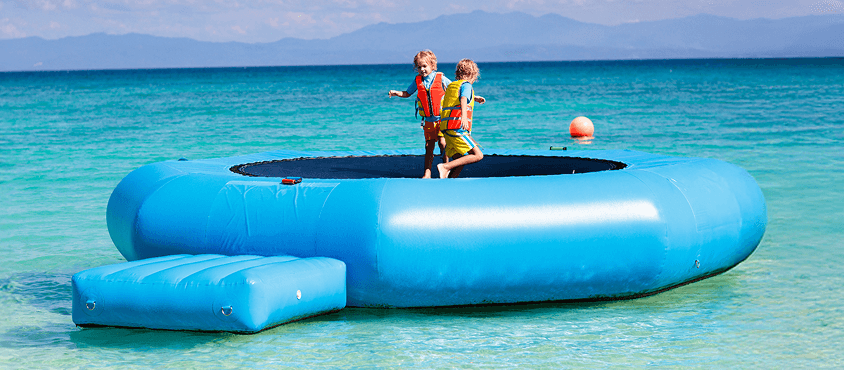
13. Water Trampolines
- Water trampolines are floating trampolines designed for lakes or calm open water.
- Made with inflatable frames and a jumping mat in the center, they combine the thrill of bouncing with the splash of aquatic fun.
- Water trampolines are a big hit at summer camps, resorts, and lake houses, and they’re great for groups — think cannonballs into the water, lounging on the inflatable edges, or just bouncing for fun in the sun.
What Type of Trampoline is Best?
With so many trampoline types out there, it’s natural to wonder which one is actually best. The truth? It all depends on what you’re looking for. Before choosing, consider:
- Your goals: Is this for fitness, fun, or performance?
- Available space: Do you have room for a full-size setup, or are you working with a smaller yard or indoor area?
- Who’s using it: Toddlers, teens, adults, or athletes? The right trampoline will match their age and skill level.
- Safety and maintenance: Springless models and inground options are great if safety is your top priority.
In the end, the best trampoline is the one that fits your needs, your space, and your bounce style.
Have Fun Out There!
Choosing the right trampoline comes down to balancing your specific safety needs, available space, and budget. Each design offers unique advantages, whether you prioritize the consistent bounce of a rectangular frame or the enhanced safety of a spring-free model. Ready to purchase? Browse trampolines today from Academy!
Trampoline Types FAQs
What’s the difference between a rebounder and a regular trampoline?
Rebounders (or mini trampolines) are small and made for indoor fitness, like cardio workouts and balance training. Regular trampolines are much larger and built for recreational jumping, tricks, or outdoor fun. Rebounders give you a gentle, controlled bounce, while regular trampolines offer higher jumps and more space to move around.
Is a spring or springless trampoline better?
It depends on what you’re prioritizing. Spring trampolines usually offer a higher bounce and tend to be more affordable, but they do require more upkeep over time. Springless trampolines are designed with safety in mind — fewer pinch points and softer edges — making them a great choice for beginners and families with younger kids.
Share


Your Feedback Matters!