 Track Order
 myAcademy® Rewards Credit Card
 Need Help?
Gifts By Budget

Academy Sports + Outdoors
Academy, LTD
Above-Ground Pool Buying Guide: Types, Sizes, Cost, + More
10 min read
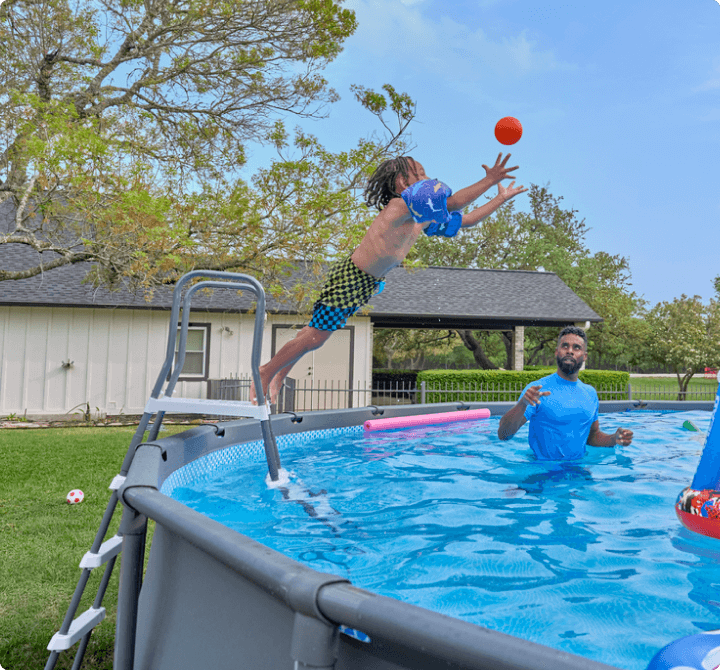
Thinking about turning your backyard into a summertime hangout spot? An above-ground pool might be just what you need. It's a fun, affordable way to cool off, relax, and enjoy time with family and friends—without the cost and commitment of an in-ground pool. In this guide, our pool experts will walk you through everything you need to know before buying an above-ground pool for your home.
Key Takeaways
- Types of Above-Ground Pools — There are inflatable, steel frame, and hard-sided above-ground pools.
- Above-Ground Pool Sizes, Shapes + Depths — Explore common above-ground pool dimensions and which may be best for your home.
- Average Above-Ground Pool Cost — Learn what costs are involved in buying an above-ground pool and price ranges for each.
- What to Know About Setting Up an Above-Ground Pool — Discover how to set up an above-ground pool from planning and prep to installation.
- How to Maintain Your New Pool — View our recommended above-ground pool maintenance and cleaning schedule.
- Things to Consider Before Buying an Above-Ground Pool — Find factors to consider before choosing a pool.
Types of Above-Ground Pools
Not all above-ground swimming pools are created equal. From quick-inflate options for the kiddos to heavy-duty setups that last all season (or longer), there’s a pool type for just about every yard and budget.
Inflatable Pools
Inflatable pools are the easiest and most affordable way to dip your toes into pool ownership. They’re made of thick vinyl, inflate in minutes, and are just as easy to drain and store when not in use. Just keep in mind that they’re not designed for long-term use and can wear out faster with frequent setup and takedown.
Best For: Families with young children, small spaces, and temporary use.
Steel Frame Pools
If you want a pool that can handle frequent use without taking up permanent real estate, steel frame above-ground pools are a great option. They feature a vinyl or PVC liner supported by a metal frame, offering more structure and space than inflatables. Steel frame pools can last multiple seasons with proper care.
Best For: Households looking for something more stable and semi-permanent.
Hard-Sided (Metal or Resin Walls) Pools
Hard-sided pools are the most durable option in the above-ground category. They’re constructed with sturdy steel, aluminum, or resin walls that can handle years of seasonal use. They often resemble in-ground pools in depth and appearance, and some can be partially buried for a more custom look. Keep in mind, however, that hard-sided pools take more effort to install.
Best For: Homeowners seeking a long-term or seasonal setup.
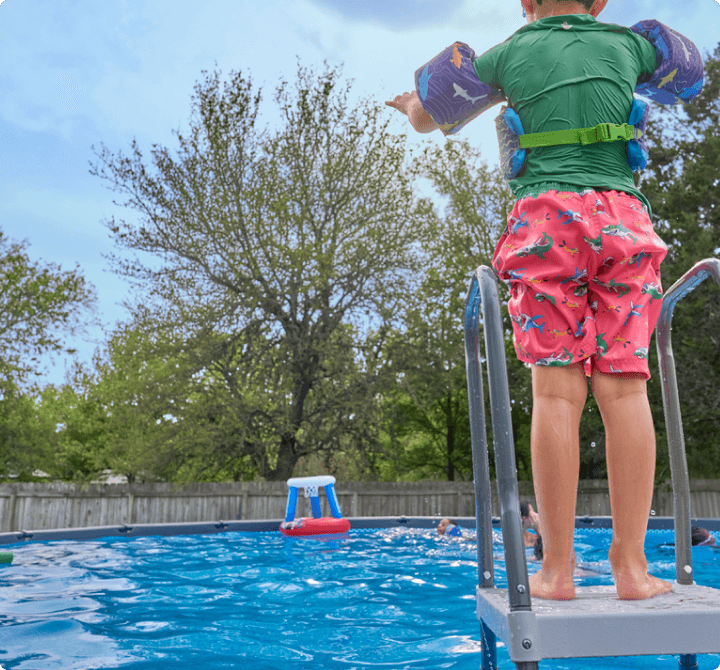
Above-Ground Pool Sizes, Shapes + Depths
Picking the right size and shape for your above-ground pool isn’t just about what fits in your backyard—it’s about how you plan to use it.
Sizes + Shapes
- Round pools are the most common and easiest to install. They’re great for general play, casual lounging, and family fun. Small round pools (around 8–12 feet in diameter) are perfect for tighter yards, while medium to large options (15–33 feet) offer more space to spread out.
- Oval pools provide a longer swim path, making them great for fitness swimmers or narrow backyards. They’re a bit more complex to set up due to extra structural supports, but the extra room can be worth it. Common sizes include 12x24 feet, 15x30 feet, and 18x33 feet.
- Rectangular pools are ideal if you want something more like a traditional in-ground pool feel. They’re great for lap swimming and pool games, but they typically come at a higher price and may require a more involved installation process. Expect to see sizes like 9x18 feet, 12x24 feet, and 16x32 feet.
Depths
- Shallow: These pools fall between 30 and 36 inches deep. They’re great for small children and casual lounging or cooling off.
- Standard: These pools are typically between 48 and 52 inches deep. They have enough space to float, swim, and play, making them ideal for most families and uses.
- Deep-end Options: Some above-ground pools have expandable liners to allow up to 6 feet of depth in the center. These are great if you want a little extra depth without going fully in-ground.
Average Above-Ground Pool Cost
Before you take the plunge, it’s helpful to get a sense of what an above-ground pool might cost. Prices can vary widely depending on the pool’s size, materials, brand, and features, but you can typically expect to see the following ranges.
- Inflatable Pool: $50-$500
- Steel Frame Pool: $300-$2,000
- Hard-sided Pool: $1,500+
- Pool Pump + Filter System: $150-$1,000
- Ladder or Steps: $50-$400
- Skimmer + Cleaning Tools: $30-$150
- Pool Cover: $50-$300
Don’t forget about potential installation costs, electrical work for the pool pump, landscaping or ground leveling, and ongoing maintenance expenses like pool chemicals. Factoring in these extras will give you a clearer picture of the total investment.

What to Know About Setting Up an Above-Ground Pool
Setting up an above-ground pool isn’t as simple as just filling it with water, but it’s not as complicated as it might seem, either. With a little planning and the right tools, you can get your backyard pool-ready in just a few steps.
Planning
Before you buy your above-ground pool:
- Measure Your Space: Choose a level area in your yard that gets sun and has room for the pool and equipment. Ensure there’s space for access, a pump/filter, and any extras like a deck or fence.
- Check Local Regulations: Look into zoning rules, building codes, and permit requirements. Some areas require fencing, electrical inspections, or HOA approval.
- Choose Your Pool Type: Decide between inflatable, steel frame, resin, or hard-sided. Consider shape (round, oval, rectangular) and depth based on your use and space.
- Plan for Site Prep: You may need to level the ground, remove grass, or lay a sand or gravel base. This step is crucial for stability and liner protection, so don’t overlook it!
- Gather Equipment and Supplies: Make sure you have or plan to buy a pump, filter, ladder, cover, and cleaning tools.
- Hire Professionals (If Needed): For large or hard-sided pools, you may need help with excavation, electrical, or setup.
Installation
Now that all the planning is done, it’s time to start setting up your above-ground pool.
- Clear and Level the Ground: Remove all grass, rocks, roots, and debris. Use a level to ensure the ground is flat—uneven ground can damage the pool or void the warranty. For large pools, a sod cutter or rented earth mover may help.
- Lay the Base: Spread out sand or crushed stone for a stable, cushioned base (2–4 inches deep). Rake it level and tamp it down firmly. Some people use a ground cloth or patio blocks under the uprights for extra support.
- Assemble the Frame: Follow the manufacturer's instructions carefully. Always start with the bottom rail and work your way up, and ensure all pieces are secured and level as you go.
- Install the Pool Wall: Unroll and insert the wall into the bottom track. This is often the trickiest part—do it slowly and with help to avoid kinks or dents. Secure the wall ends with screws or clips as directed.
- Add the Liner: Let the liner warm in the sun for flexibility. Then, spread it evenly across the pool base and attach it to the top rail or coping. Smooth out wrinkles as much as possible while adding a few inches of water.
- Fill the Pool: Begin filling with water and adjust the liner as it fills to remove any remaining wrinkles. Stop halfway to install the skimmer and return fittings as instructed.
- Install Equipment: Connect the pump and filter to the skimmer and return lines. Prime the pump and test it to ensure water circulates properly. Add accessories like a ladder, cover, or heater if needed.
- Balance the Water: Test and adjust pH, chlorine, alkalinity, and other chemicals. Use a pool testing kit or take a sample to a local pool store to ensure safety before swimming.

How to Maintain Your New Pool
Once your above-ground pool is up and running, a little regular upkeep goes a long way. Staying on top of pool maintenance helps keep the water clean, extends the life of your equipment, and makes every swim more enjoyable. Here’s a simple checklist to keep your pool in top shape:
- Skim the surface daily to remove leaves, bugs, and floating debris.
- Vacuum the bottom weekly or as needed to clear dirt and sediment.
- Brush the walls and floor to prevent algae buildup and keep surfaces clean.
- Run the filter every day for 8–12 hours to keep water circulating and clear.
- Backwash or clean the filter weekly or according to your filter’s instructions.
- Test water chemistry 2–3 times weekly using strips or a liquid test kit.
- Adjust chemicals as needed—monitor chlorine, pH, alkalinity, and stabilizer levels.
- Shock the pool weekly and after heavy use or storms to eliminate bacteria and contaminants.
- Maintain the water level so it stays halfway up the skimmer for proper filtration.
- Empty the skimmer and pump baskets to maintain a strong water flow.
- Inspect the liner regularly for wrinkles, punctures, or wear, and patch as needed.
- Use a pool cover when the pool isn’t in use to keep debris out and reduce chemical evaporation.
- Store pool chemicals safely in a cool, dry place away from direct sunlight and moisture.
Things to Consider Before Buying an Above-Ground Pool
An above-ground pool can be a great backyard upgrade, but there’s a bit more to it than picking the first one you see online. Before you buy, take a few minutes to think through the details—your future self will thank you.
- Budget: Factor in the cost of the pool, equipment, installation, and ongoing maintenance.
- Available Yard Space: Measure the area and make sure it’s level and free of underground utilities.
- Pool Size and Shape: Think about who will use it (kids, adults, lap swimmers) and how much space you have.
- Local Regulations: Check for permits, zoning laws, and fence or barrier requirements.
- Type of Pool: Decide between inflatable, steel frame, or hard-sided based on durability and how permanent you want it to be.
- Installation Needs: Determine if you’ll install it yourself or hire a professional (some types require more effort and tools).
- Required Equipment: Plan for a pump, filter, ladder, cover, and chemical supplies—some packages include these, others don’t.
- Maintenance Commitment: Understand what’s involved in cleaning, testing water, balancing chemicals, and winterizing.
- Water and Utility Access: Ensure you have a hose nearby and access to safe electrical outlets for equipment.
- Warranty and Brand Reputation: Look for a well-reviewed manufacturer with a solid warranty on the frame and liner.
Have Fun Out There!
An above-ground pool is one of the easiest ways to bring summer fun right to your backyard—but choosing the right one takes a little planning. If you’re ready to explore your options, check out the above-ground pools available at Academy Sports + Outdoors!
FAQs
When is the best time to buy an above-ground pool?
The best time to buy an above-ground pool is typically in the off-season during fall or early spring. During this time, prices may be lower and there’s more inventory to choose from. If you wait until summer, you may pay more and have fewer options.
Which type of above-ground pool is best?
It depends on your needs. Inflatable pools are great for short-term fun, steel frame pools offer a good mix of durability and price, and hard-sided pools are ideal if you’re looking for a long-term setup with more structure.
What is the best thing to put under an above-ground pool?
A level, compacted base of sand or crushed stone works well to protect your liner and provide stability. You can also add a ground cloth or pool pad for extra cushioning and liner protection.
How much should I budget for an above-ground pool?
The amount you need to budget depends on the type of above-ground pool and accessories you want. Expect to spend anywhere from $50 to over $2,000 for the pool itself, depending on the type and size. You’ll also need to budget for the cost of a pump, filter, ladder, cover, maintenance supplies, and any site prep or installation help you might need.
Share


Your Feedback Matters!